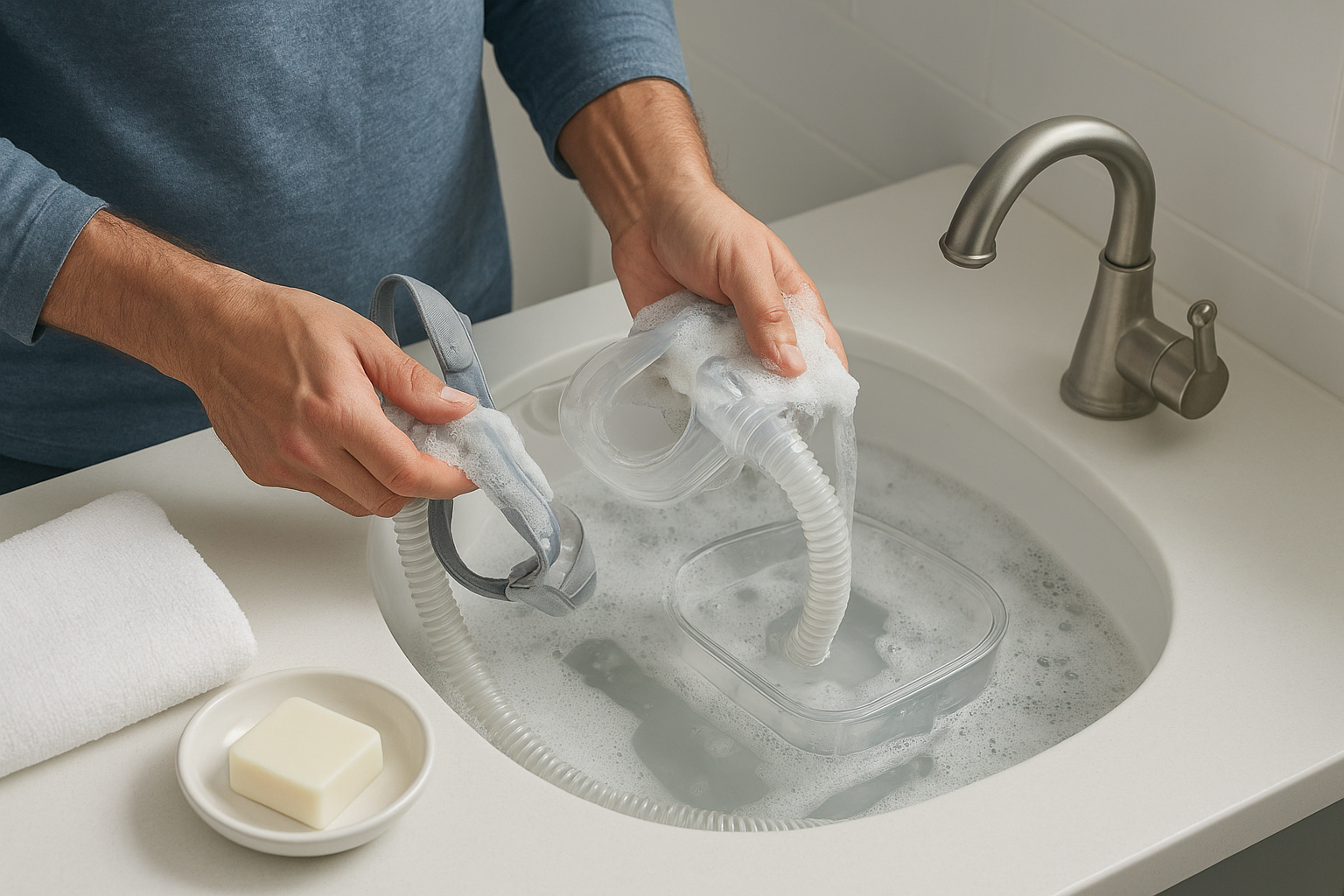
Continuous Positive Airway Pressure (CPAP) therapy is the gold standard for treating obstructive sleep apnea. But just as important as using your CPAP machine every night is keeping it clean and well-maintained. A neglected CPAP device can harbor bacteria, mold, and mineral buildup — potentially undermining the very therapy meant to help you breathe better.
This guide covers the scientifically supported best practices for cleaning and maintaining your CPAP mask, tubing, humidifier, and filters — plus when and why to replace them.
🧠 Why CPAP Cleaning Matters
According to the American Academy of Sleep Medicine (AASM), consistent cleaning helps prevent respiratory infections, skin irritation, and sinus issues among CPAP users (AASM, 2023).
A 2018 study published in Chest Journal found that unclean CPAP masks can harbor pathogenic bacteria such as Staphylococcus aureus and Pseudomonas aeruginosa, which can cause sinus and respiratory infections — especially in humid environments or warm climates.
“CPAP users should clean their mask, tubing, and water chamber daily with mild soap and warm water to reduce microbial contamination.”
— Sleep Foundation, 2024
In short:
✅ Clean equipment = effective therapy + healthy breathing.
❌ Dirty equipment = risk of infection + reduced CPAP performance.
🧴 Daily, Weekly, and Monthly Cleaning Schedule
Here’s a breakdown of how often each CPAP part should be cleaned or replaced based on ResMed, Sleep Foundation, and Mayo Clinic recommendations.
| Component | Cleaning Frequency | Replacement Cycle | Cleaning Method |
|---|---|---|---|
| Mask cushion & frame | Daily | Every 3–6 months | Mild soap + warm water |
| Tubing | Weekly | Every 6–12 months | Rinse with soap + water; air dry |
| Humidifier water chamber | Daily | Every 6 months | Empty & rinse; disinfect weekly |
| Filter (disposable) | Weekly inspection | Every 1 month | Replace; don’t wash |
| Filter (reusable foam) | Weekly | Every 3–6 months | Wash & air dry |
| Headgear & straps | Monthly | Every 6–9 months | Hand wash; air dry |
🩺 ResMed recommends cleaning CPAP accessories regularly to ensure optimal airflow and comfort while preventing bacterial growth.
— ResMed Cleaning Guidelines, 2024
🧼 Step-by-Step CPAP Cleaning Guide
1. Unplug and Disassemble
Disconnect your CPAP device from power. Remove the mask, tubing, humidifier chamber, and filters. Avoid submerging the main machine.
2. Wash with Mild Soap
Fill a sink or basin with warm (not hot) water and add a few drops of fragrance-free mild soap — such as baby shampoo or dish soap. Avoid alcohol, bleach, or antibacterial detergents, as they can damage silicone.
3. Rinse Thoroughly
Rinse all parts under running warm water to remove any soap residue, which can irritate skin or lungs.
4. Air Dry Completely
Place the components on a clean towel or hang them to dry in a well-ventilated area away from direct sunlight.
⚠️ Moisture trapped inside tubing or the humidifier can promote mold. Always ensure everything is fully dry before reassembling.
5. Reassemble and Inspect
Once dry, reconnect all parts. Inspect tubing and mask seals for wear, discoloration, or cracks.
💧 How to Clean the Humidifier Chamber
Your humidifier is particularly prone to mineral buildup and bacterial contamination, especially if you live in an area with hard water.
Best Practice:
-
Empty the chamber every morning to prevent standing water.
-
Rinse with warm water daily.
-
Once per week: soak in a mixture of one part white vinegar to three parts water for 15–20 minutes, then rinse and air dry.
“Using distilled water is essential to avoid calcium and mineral deposits inside your humidifier chamber.”
— Mayo Clinic Sleep Medicine Department, 2023
Avoid:
-
Tap water (contains minerals)
-
Boiled water (only if distilled is unavailable)
-
Harsh chemicals or bleach
🌬️ How to Maintain CPAP Filters
Your CPAP filter keeps dust, allergens, and hair out of your airway — and out of your lungs.
Two Types of Filters:
-
Disposable filters (paper/fiber): Replace every 2–4 weeks. Do not wash.
-
Reusable foam filters: Wash weekly with mild soap, rinse, and air dry.
Neglecting filter maintenance can lead to:
-
Overheating of the motor
-
Reduced pressure performance
-
Contaminated air intake
“Replacing filters regularly is essential to ensure effective therapy and prevent device malfunction.”
— ResMed AirSense User Manual, 2024
😷 What Happens If You Don’t Clean Your CPAP?
If your CPAP smells musty or your mask feels oily, it’s time to clean it — immediately. Neglecting regular maintenance can lead to:
| Problem | Cause | Consequence |
|---|---|---|
| Musty smell | Bacteria or mold | Respiratory infection |
| Cloudy water chamber | Mineral buildup | Reduced humidity |
| Skin irritation | Dirty mask cushion | Acne, rashes |
| Pressure issues | Blocked tubing | Poor sleep quality |
| Machine overheating | Clogged filter | Shortened device lifespan |
According to a 2021 study published in Respiratory Care, up to 65% of CPAP users clean their equipment less than once per week, and those users had twice the rate of upper respiratory infections compared to those who cleaned daily.
🔋 Quick Cleaning Options for Busy Travelers
If you’re always on the go, cleaning doesn’t have to be a hassle. Consider these ResMed-compatible travel cleaning solutions:
-
CPAP Cleaning Wipes: Alcohol-free, convenient for mask cushions.
-
Portable UV Sanitizers: Use UV-C light to disinfect in minutes.
-
Travel Hose and Filter Kits: Smaller, easier to clean and dry.
TSA allows CPAP machines and accessories in carry-on luggage. Always empty the humidifier before flights and pack spare filters.
— TSA.gov, 2024
🧩 Comparison: Manual Cleaning vs. Automated Cleaning Devices
| Method | Pros | Cons | Recommended For |
|---|---|---|---|
| Manual Cleaning (Soap & Water) | Inexpensive, reliable, AASM-approved | Time-consuming, drying required | Most users |
| Ozone Cleaners (e.g., SoClean) | Fast, no water | FDA warning (ozone exposure risk) | Not recommended by FDA |
| UV Cleaners | Chemical-free, portable | Limited reach (line of sight) | Frequent travelers |
| Wipes & Sprays | Quick spot cleaning | Not full disinfection |
Daily supplement |
The U.S. FDA (2021) issued a safety communication warning CPAP users against ozone-based sanitizers, citing potential lung irritation and device damage.
🧰 Maintenance Beyond Cleaning
Keeping your CPAP equipment in top shape involves more than washing:
-
Check for leaks — If your mask hisses or loses seal, replace the cushion.
-
Inspect tubing — Look for moisture, cracks, or stiffness.
-
Replace water chamber — If discolored or cloudy.
-
Service your CPAP machine — Once every 1–2 years for calibration.
ResMed and Philips both recommend complete accessory replacement every 12 months for consistent performance and hygiene.
💬 Frequently Asked Questions (FAQ)
Q1: Can I use vinegar daily instead of soap?
No. Vinegar is best for weekly disinfecting, not daily use, as it can damage silicone if used too often.
Q2: What if I don’t have distilled water?
Boiled and cooled tap water is acceptable short-term. Avoid bottled mineral water.
Q3: Can I put CPAP parts in the dishwasher?
Never. Heat can warp silicone and plastic parts.
Q4: Are automated ozone cleaners safe?
Not according to the FDA, which warns against ozone exposure risks and residual odors inside devices.
Q5: How often should I replace my mask and tubing?
Most manufacturers recommend mask cushions every 3 months, tubing every 6–12 months.
💤 Key Takeaways
-
Clean mask and humidifier daily.
-
Wash tubing weekly.
-
Replace filters monthly.
-
Use distilled water only.
-
Avoid ozone cleaners; use soap and water or UV sanitizers.
Keeping your CPAP clean means better health, fewer infections, and more comfortable sleep.
🛒 Call to Action: Keep Your Therapy Fresh and Reliable
Clean therapy is effective therapy.
Don’t let worn or dirty accessories compromise your sleep.
👉 Explore our range of ResMed-compatible replacement parts — including mask cushions, tubing, filters, humidifier chambers, and travel cleaning kits.
Shop now and breathe easier knowing your CPAP setup is safe, clean, and ready for restful nights — wherever you are.
📚 References
-
American Academy of Sleep Medicine (AASM). CPAP Patient Education & Maintenance Guide. 2023. https://sleepeducation.org/patients/sleep-apnea/cpap/
-
ResMed. Cleaning Your CPAP Equipment. 2024. https://www.resmed.com/en-us/sleep-health/cpap-cleaning/
-
Sleep Foundation. CPAP Cleaning and Maintenance Guide. 2024. https://www.sleepfoundation.org/cpap/cpap-cleaning-guide
-
U.S. Food and Drug Administration (FDA). Safety Communication: Risks from Ozone Cleaners Used with CPAP Machines. 2021. https://www.fda.gov/medical-devices/safety-communications
-
Mayo Clinic. Sleep Apnea: CPAP Therapy and Equipment Care. 2023. https://www.mayoclinic.org/diseases-conditions/sleep-apnea/in-depth/cpap/art-20044164
-
Respiratory Care Journal. CPAP Hygiene Practices and Respiratory Infections in Sleep Apnea Patients. Vol. 66, No. 5, 2021.
-
Transportation Security Administration (TSA). Traveling with Medical Devices. 2024. https://www.tsa.gov/travel/special-procedures/travelers-medical-conditions